
The Golf Course as Crime Scene
Blow OutThis flow examines how ordinary landscapes and routines provide concealment for carefully planned attacks.
increasing Bearing strength in each event
 decreasing
Bearing strength in each eventdecreasingAn Ordinary Friday Round

An Ordinary Friday Round
A social game
Ronnie O’Neill plays a round with Steven Yates, Jack Reilly, and Nathan Burke. Golf banter and familiar routines make the group’s presence on the course seem unremarkable.
At the seventh tee, Ronnie strikes a shot and feels a sharp pain in his neck. He assumes an insect has stung him and keeps playing.
Concealment in plain sight
The attack offers no loud report or obvious wound. A shooter hidden beyond the fairway can exploit the swing, the wind, and the players’ attention on the ball.
The course’s openness becomes a form of cover: visitors are expected, movement is routine, and nobody initially interprets a tiny wound as an attack.
Reconstructing the Shot
Reconstructing the Shot
The tee becomes a scene
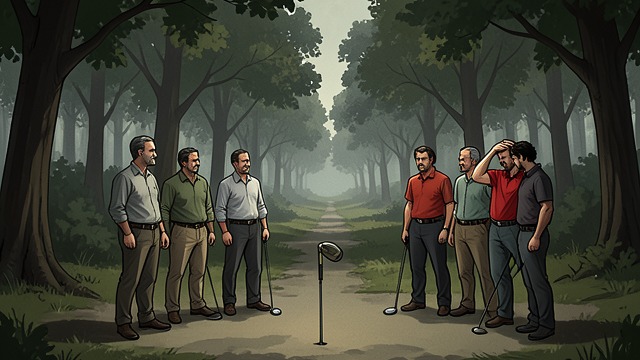
Police close the seventh hole only after hundreds of golfers have crossed it. Jack Benson warns that any trace evidence may have been trampled or washed away.
Joanne Stuart uses the players’ memories and a professional’s demonstration to reconstruct the moment Ronnie’s neck was exposed. The details give Manish Jindal a basis for estimating the shooter’s direction.
The woods as a firing position
The reconstruction points toward a narrow sector among trees, roughly a hundred yards from the tee. That distance makes a skilled air-rifle user more likely than an opportunistic attacker.
Investigators search for a route in and out, rather than expecting a clean set of clues. The landscape matters because it allows a shooter to disappear among ordinary pathways.
Ainsdale’s Similar Landscape
Ainsdale’s Similar Landscape
Another golf setting
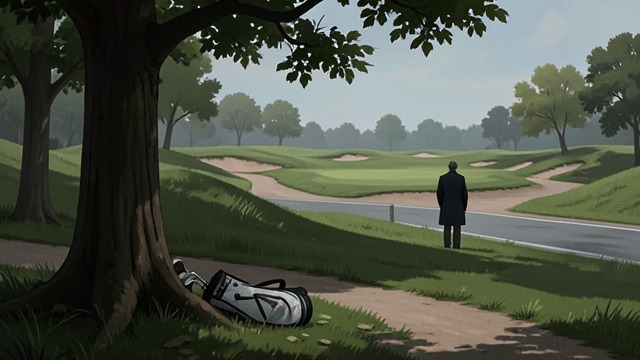
Morris Arthur Grimshaw is attacked on a golf course in Ainsdale. The second site repeats the first attack’s blend of leisure, concealment, and a brief exposed target.
Local investigators find that many golfers and walkers have used the area since the shooting. As in Worsley, the site offers many possible routes and few reliable witnesses.
Comparing two scenes
Joanne and Teresa Coppull compare the terrain, including dunes, trees, paths, and nearby roads. A golf bag or kite bag could conceal a long weapon without drawing attention.
The settings suggest planning rather than a spontaneous confrontation. Their similarity helps establish a pattern, even though the investigators cannot yet identify a shared vehicle or suspect.
The Woods at Stenner
The Woods at Stenner
A route known by habit
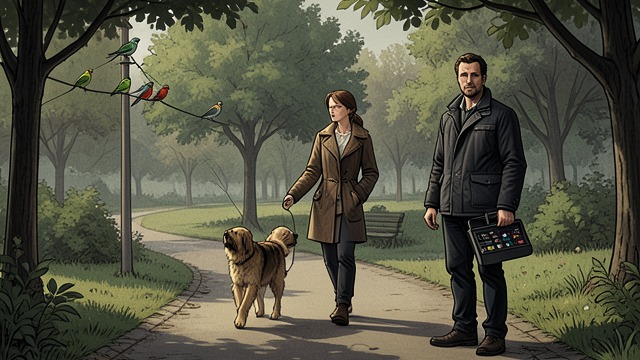
Heather Rand walks her dog through Fletcher Moss Park and Stenner Woods on a familiar routine. She stops to watch parakeets, creating a predictable pause in an otherwise ordinary walk.
The shooter uses that still moment to strike her. Her routine offers an opportunity, but investigators do not know whether she was followed or chosen in advance.
Clues without certainty
A witness later reports a person carrying what looks like fishing tackle. That detail may describe a disguise for a long weapon, but it does not prove the witness saw the attacker.
The park and river paths create numerous exits. The scene shows why public green spaces can conceal a prepared attack and complicate a search.
A Familiar Disguise
A Familiar Disguise
An object mistaken for leisure gear
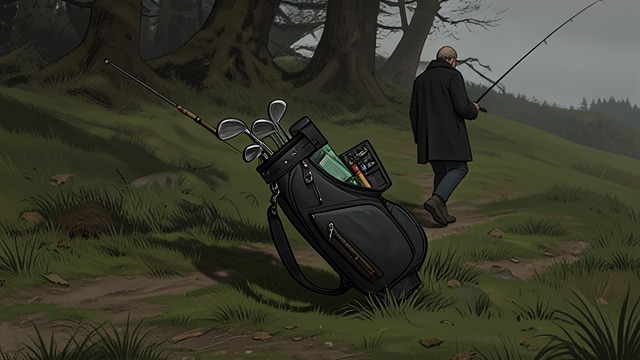
Witnesses recall a person carrying something like fishing tackle near a shooting scene. The disguise makes sense in parks and near golf courses, where unusual bags do not immediately attract attention.
The detail prompts teams to review fixed cameras, motorway records, and local sightings. It is an investigative possibility, not a confirmed identification.
Landscape and access
Across golf courses, woods, and parkland, the attacker can arrive and leave among ordinary users. Paths connect sites to roads, housing, and transport routes.
The countryside and city green spaces do not merely form backdrops; they shape the crime. Their everyday use creates anonymity, while their size burdens investigators with extensive searches.
Friday morning, October 13
Monday afternoon, October 16
Wednesday morning, October 18
Thursday afternoon, October 19
Friday and Saturday, October 20–21
